Articles

Singing in a choir - 4 life lessons
Submitted by huw on Thu, 09/28/2023 - 17:15
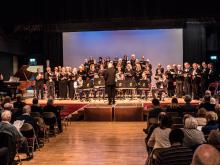
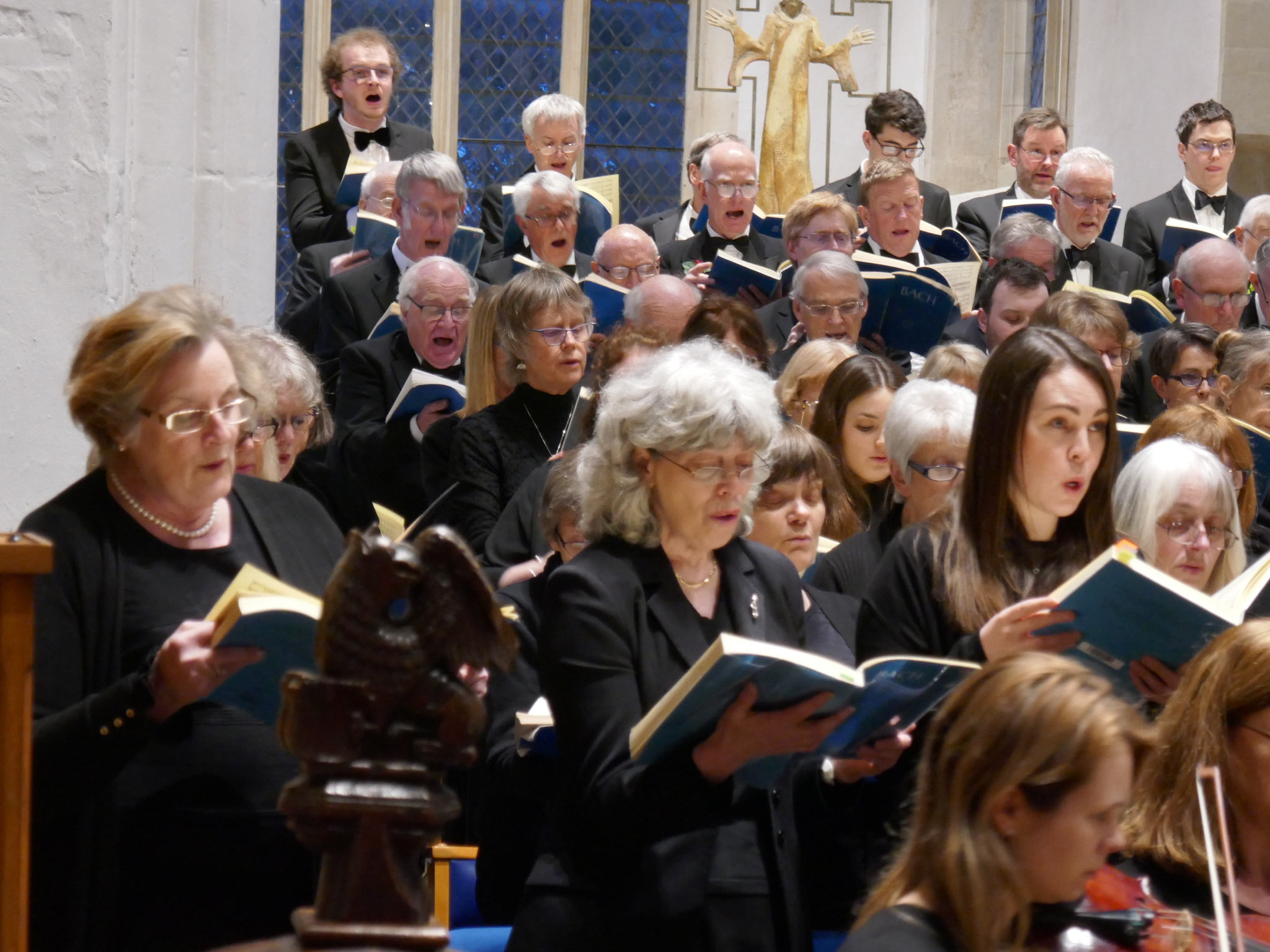
RCS in performance

According to a survey published in July 2017, each week two million people sing in choirs across the UK – why?

Reflecting on two decades of singing with the Royston Choral Society, I’ve identified some life lessons I’ve learnt from our collective efforts to create ‘fine music, made locally’. They aren’t exclusive to singing in a choir, but that’s what I’ve been doing since 2000.

First impressions count

The introduction to my local choir was not at a concert – I’d never heard them perform - so I needed to be persuaded in other ways that spending two hours a week in a cold draughty church in the middle of winter would be time well-spent. I sent a speculative e-mail expressing my interest in joining and, just three days later, I got a knock on my front door from a member of the choir. I commented on the impressive personal response to my e-mail and was surprised by his reply: “well, I live just across the road”!

That initial friendly welcome, from someone who was to become a fellow tenor, fired my enthusiasm and an enduring Tuesday night fix for around 40 weeks a year – that’s 900 rehearsals and counting!

Leadership matters

A good conductor is essential - to control up to 80 singers in our case - and conjure up a performance that resembles what the composer intended.

After our current musical director – Andrew O’Brien joined us in 2015. I wouldn’t have believed how our standard improved, and in an amazingly short time, if I hadn’t been part of that change. It wasn’t just about increasing our collective self-belief that we could do better, and focussing on breathing and singing technique, it was about light-hearted encouragement and mutual respect.

It’s about team work

But every leader needs followers and every member of a choir needs to work in harmony (literally!) for success. A choir has to sound like a unit – however good they are, a single singer can ruin the effect if they don’t listen to those around them and blend in. That said, only one person has been ‘asked to leave’ in my 20 years with the choir, and that didn’t happen until great efforts had been made to nurture the particular choir member’s musical compatibility.

Being able to focus is a healthy habit

Science has shown that singing and listening to music is good for our mental health; releasing dopamine and serotonin – of interest to GPs treating anxiety and depression – into the brain. Singing (and DIY) is one of the few times I experience ‘flow’ - that wonderful experience of being so absorbed in doing something that time and meals pass unnoticed.

I took up singing and running at the same time, partly in response to my mental ill health at the time. It’s also been handy for getting to rehearsals when I’m running late (pun intended) and the two activities also come together for mutual benefit by helping my breathing.   

Mindfulness – a focus on an activity (commonly our breathing) to the exclusion of all else – is another interest of mine. When singing, the focus is multi-faceted; we have to concentrate on reading the music and words (often in a language other than English), listening to other singers in the choir, singing in tune and breathing properly and, of course, watching the conductor.

For a longer version of this piece, go to https://enterpriseessentials.wordpress.com/2023/03/27/singing-in-a-choir-four-life-lessons/
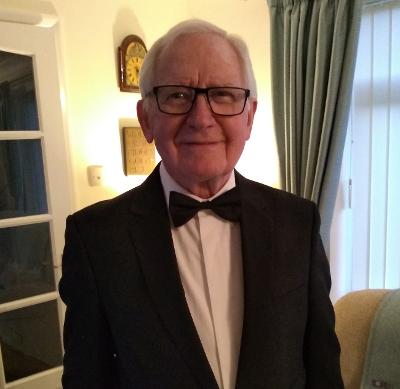
Alan Bateman's Musical Notes

Submitted by huw on Thu, 09/28/2023 - 16:50
Alan Bateman
  1. What is your earliest memory of music in your life? I was a 7 year old pianist playing my first solo in public. It was a little piece called ‘Tom Thumb’ and I remember being scared to death! It was in a competition in the Ealing Music Festival, for the appropriate age group. I survived but it was a step along the way to my graduation in Music at Trinity College, London in 1961.
  2. What was your first 'public performance'? My first singing role was as a 14 year old in a school production of ‘Let’s Make an Opera’ by Benjamin Britten. I was Sam, the chimney sweep boy! In later years I was privileged to have Charles Kennedy Scott as my vocal tutor. He was the founder of the Orianna Madrigal Society with Sir Thomas Beecham. In 1960 I went to Bayreuth and played with the European Youth Orchestra on Double Bass (Contrabass) in the Wagner Festival Hause. That was a simply amazing experience (We were all invited to all the performances of Wagner’s ‘Ring’ operas. Wow! That was a fantastic education in itself).
  3. Who is your favourite composer/ songwriter? My favourite composer is Brahms – and especially his German Requiem.  My favourite songwriter is Franz Schubert – and especially his song cycle Winterreise.
  4. How did you find your way to the Royston Choral Society (RCS)? When I retired to Royston I needed to join a choir and imagined that the Cambridge Choral Society (CCS) would be superior to Royston so, from 2005 -2018, I sung with them. Then they closed down. That’s when I proved the old adage ‘how wrong can you be’; RCS is as big as, and actually better than, CCS! Andrew O’Brien’s training and conducing is top class by anyone’s standards and I am thoroughly enjoying the experience.
  5. Would you like to tell us a musical joke? An orchestra was hit by lightning. Only the conductor died. 

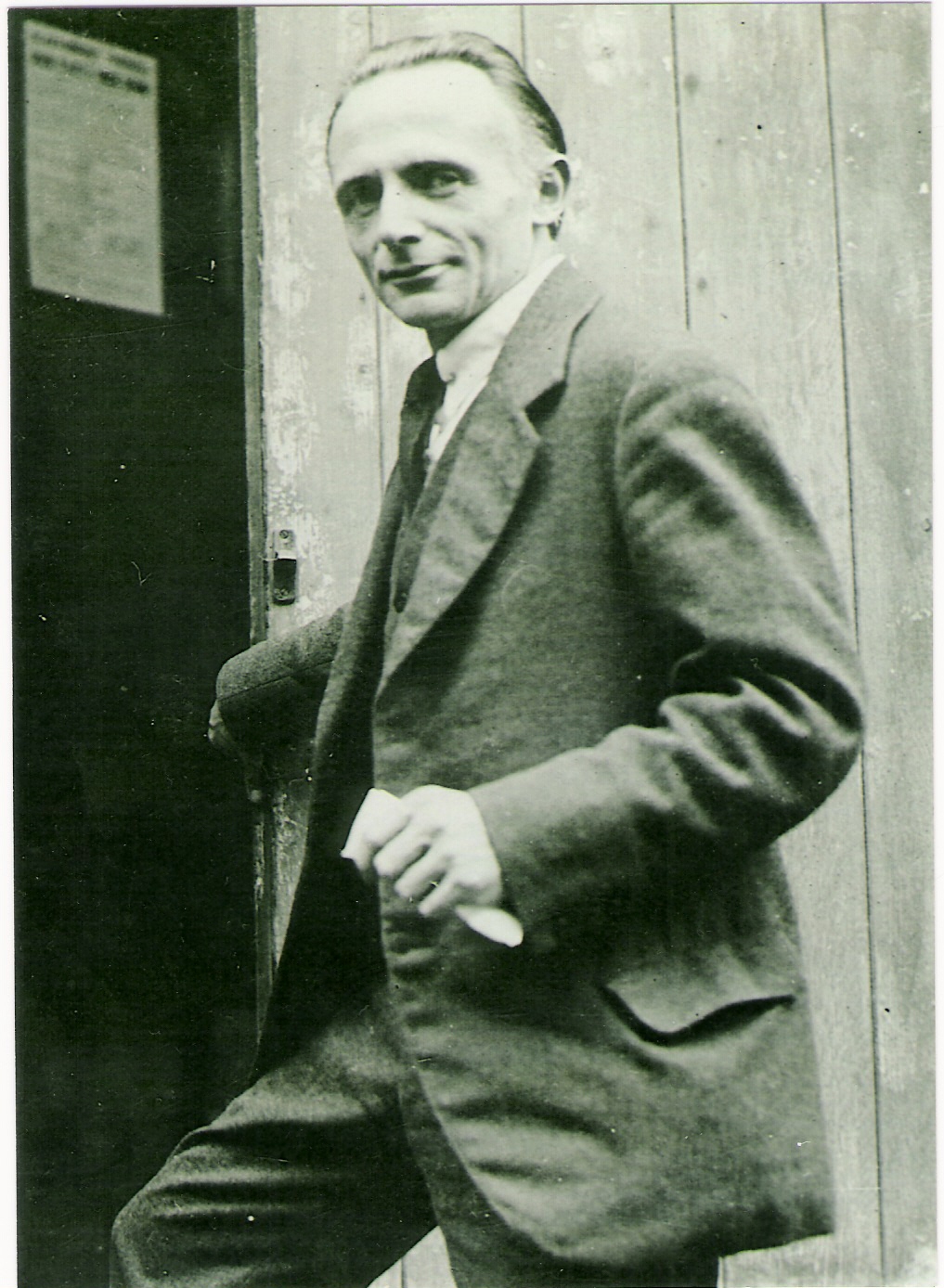
Rutland Boughton - the man and his music

Submitted by huw on Mon, 06/12/2023 - 22:01

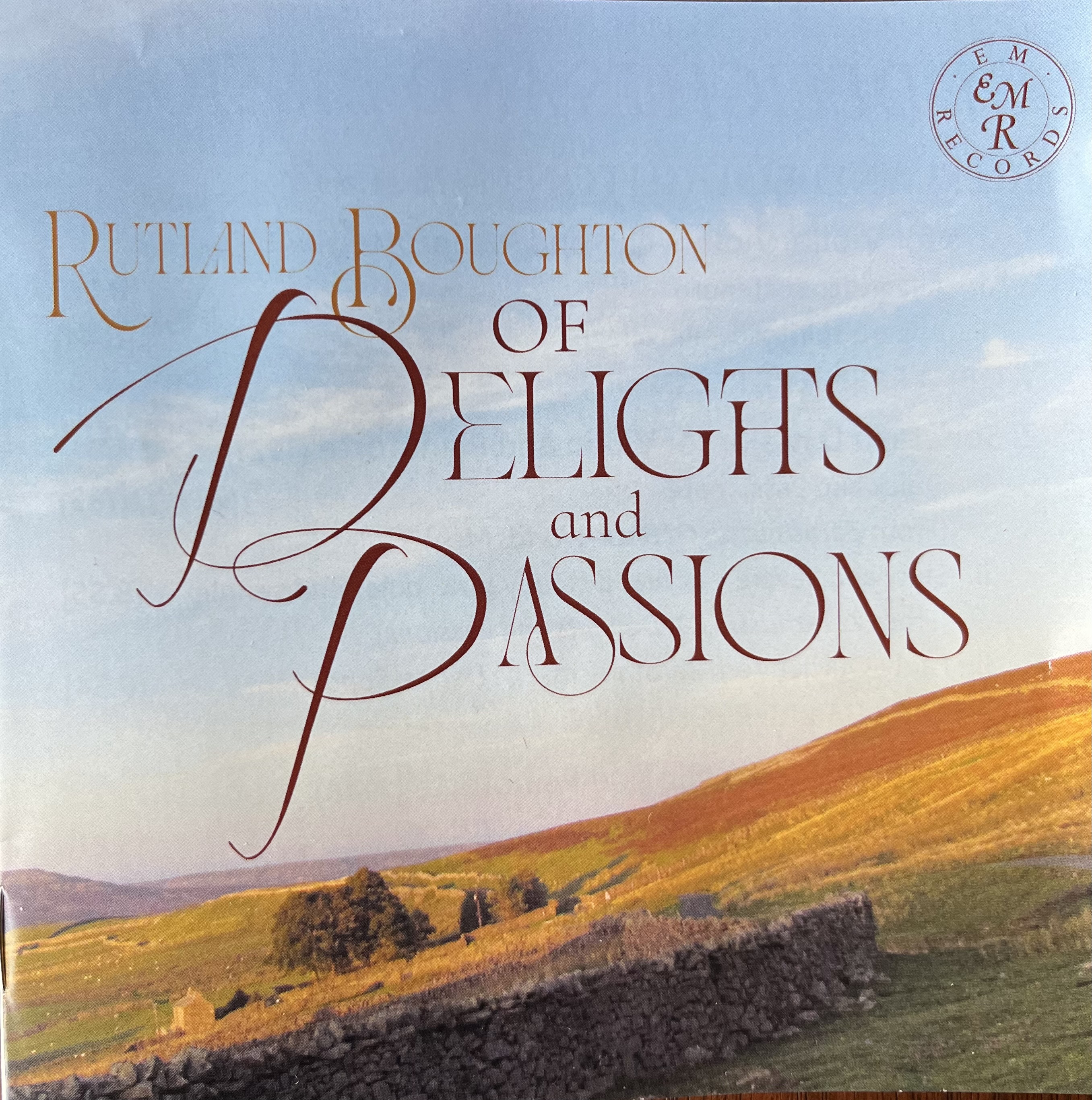
The Royston Choral Society’s 50th season continues with a celebration of English music the theme for their June 2023 concert. As such, it’s timely indeed that a new CD makes available - much of it recorded for the first time - the music of an English composer, Rutland Boughton, whom few will know, with those who do claiming he has been largely overlooked by ‘the establishment’.

One such supporter is his grandson – Ian Boughton - soloist and choir member with Royston Choral Society. I sit down with Ian - my fellow choir member - to explore his grandfather’s legacy and, hopefully, bring his music to a new audience.

I, myself, am a newcomer to Rutland Boughton’s work and a first listen to the new CD - ‘Of Delights and Passions’ - immediately transported me back in time (the way great music can do) nearly 60 years to my own grandfather’s house where, on Sunday evenings, he always seemed to have the Palm Court Orchestra playing on the BBC Light Programme!  But we are here to talk about Ian’s grandfather, not mine!

Ian recalls… “He was an interesting character with a very interesting personal life. He had three successive partners – but professionally, he was noted for the direction he wanted to take his music - to appeal to the masses. He was quite a different man to say Vaughan Williams and Elgar but not short of intellect or ability (he wrote widely on music for many publications as well as completing a book on Bach). He wanted his music to bring the people together – which explains his founding of the ‘original Glastonbury Festival’ – 56 years before Michael Eavis launched his!

“He was a man who sought tunes that would be memorable; this is reflected in the music that’s shared on the CD but the ‘Faery Song’ from his notable opera ‘The Immortal Hour’ became a household favourite in its day, and was performed many times on BBC radio and on TV and it was taught in schools, as now ‘mature’ pupils often tell me!. Examples of known tenors singing the song can be heard on YouTube.”

I’m intrigued to hear about Rutland Boughton’s creation of ‘choral dramas’.  Ian continues “He was very influenced by Wagner - the concept of using choruses to help narrate the story but using the English, rather than the Germanic, style of music. His choral dramas, unlike conventional operas, even involved the chorus in being part of the scenery – as forests or castles for example.” The arboreal reference takes me back to my English O’level and Shakespeare’s ‘Macbeth’ in which, as some will know, Birnam Wood moved!

Ian goes on to make a bold claim – “At the height of his career in the 1920s and 30s, Rutland Boughton surpassed Vaughan Williams and Holst as one of the most talked about composers in this country.” Which leads me to the perhaps obvious question, why is his music not better known today – had he fallen out with the establishment?

“He didn’t so much fall out of favour with the establishment – he was ‘anti-establishment’ from his early days, and joined the British Communist Party. As alluded to earlier, he believed in music for the people and sympathised with the lower social classes; that classical music was too elitist, appealing only to a minority of society. He chose the Communist (or Commune) model to challenge this and, of course, in the 1920s and 30s this was frowned on heavily. He did resign from the Communist Party in 1956 over the Hungarian Uprising but he had already blotted his copybook when, in1926, he openly supported the Miner’s Lockout and General Strike through one of his productions. Thereafter he never recovered despite writing some wonderful music “

“Rutland was of course very outspoken – challenging BBC decisions not to share his music – and he refused to endear himself to the ‘right’ people.  When his opera ‘The Immortal Hour’ reached a successful world record run in London in the 1920s and 30s members of Royalty would turn up, hailing him a hero but he didn’t like that! He felt it was a far cry from his original intentions and when he said so, people were puzzled and that was the start of his downfall.

Rutland Boughton in Glastonbury

Returning to Glastonbury – the location for Rutland Boughton’s musical festivals from 1914 to 1927, Ian has some interesting inside information… “Michael Eavis [the man behind the current Glastonbury Festival] always said he was highly influenced by grandad’s ideas – which partly explains the name of the current festival, which is actually at Pilton – six miles from Glastonbury.”

An illustration from Ian about funding of the (first) Glastonbury Festivals shows his grandfather’s resourcefulness in sustaining his life in music. “He tried to raise money from a national appeal and was almost successful but not enough to build a theatre [sounds like an early-day crowdfunding campaign]. He did however become friends with Roger Clark – part of the famous Clark family of shoemakers in Street (Somerset) - and they came to the rescue and in time because it was August 1914, the start of the World War. The ideals behind the first Glastonbury Festival would seem to chime with the Clark family’s Quaker values.”

We return to the launch of the CD and the coincidence of Royston Choral Society’s celebration of English music in their summer concert. Ian reflects on the case for sharing his grandfather’s music.

“There’s always been a need to get English music to the fore; it’s part of our national heritage. The only person who currently seems to be doing this is Em Marshall-Luck who set up the annual English Music Festival sixteen years ago [see https://www.englishmusicfestival.org.uk] to provide a platform for works by British composers and for music that people may not have heard before. The national broadcasters and other people seem to have limited interest – and there appears to be a shift away from an interest in British music of the late 19th century and early 20th century. Consequently, there are many British composers out there who remain neglected.

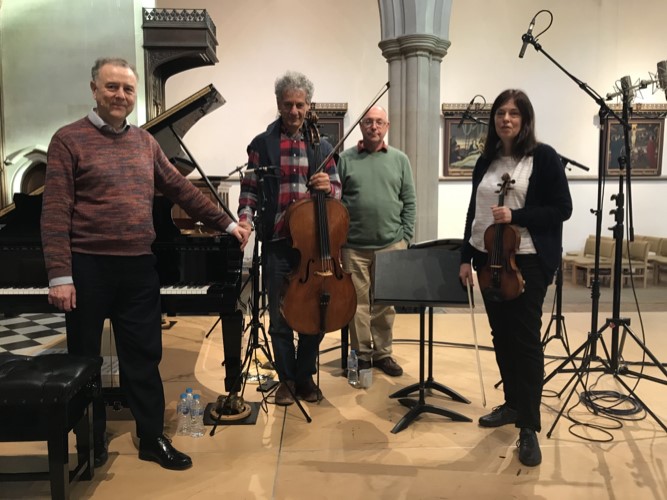
The English Piano trio with Ian Boughton centre rear

Ian is open to discuss his grandfather’s life and works. For further details about Rutland Boughton and the new CD – Of Delights and Passions – a mix of chamber music, performed by the English Piano Trio, contact Ian at [email protected]

Singing is good for you!

Submitted by huw on Sat, 05/27/2023 - 17:07

“From hearing just the first few notes of your favourite song, you can sense a change – an immediate uplifting of your mood… bringing ‘in the moment’ happiness as well as longer-lasting wellness.”

The pandemic and lockdown may seem like history to some, but for others the memory lingers on. This podcast on singing and wellbeing – from both listening and participating – reflects on those days and ways that music helped lighten moods.

https://whatworkswellbeing.org/resources/singing-and-choirs-whats-wellbeing-got-to-do-with-it

Soprano Stories - Jenny Leitch

Submitted by huw on Sat, 05/27/2023 - 17:05

My musical story probably started in my genes. My paternal grandfather was a church organist for 30 or 40 years; he played at our wedding in 1970!  My maternal grandfather was gassed in World War 1 and shipped back to the UK for hospital treatment. My granny was a young voluntary nurse in the same hospital. They both happened to join in the hospital concert party! After the war they shipped off to Mildura in south east Australia, where this grandpa joined the church choir!

As a small child I was fascinated by Mum’s wind-up HMV gramophone playing Teddy Bears’ Picnic and Noddy songs. Seemed quite magical to me! BBC Schools Radio was an important resource for schools in the 1950s and 60s. Singing Together & Rhythm & Melody were a regular part of our week and craft lessons were often accompanied by Peter and The Wolf on the school record player. Our head mistress also ran the Brownies and Girl Guides which involved more singing, especially campfire songs.

Several of us also joined the church choir from about nine till leaving home for college. I grew up on a farm two miles from the village centre, so attendance entailed a lot of cycling, but in adolescence it gave me a bona fide reason to be in the village on a Friday evening!

Then a gap through college, marriage, teaching, children and Open University degree, till I joined Dunmow Singers and trips to Dunmow’s twin town in France to perform in joint concerts and enjoy French family hospitality.

Moving to Great Chishill in 1998 I discovered Royston Choral Society – and more French trips – Run by Singers singing holidays in Europe & UK, and Icknield Way Parish Choir.

For three or four years, I took my late husband to music therapy groups for people with dementia in Sawston and Saffron Walden. This last-mentioned group is sponsored by Anglia Ruskin University and Saffron Hall. It has recently been honoured with a prestigious Queen’s Award for its positive impact on people with dementia – and their companions.

Soprano Stories - Ann Keep

Submitted by huw on Sat, 05/27/2023 - 17:03

Last March, I caught Covid-19 at a rehearsal along with a number of other choir members.  I thus spent 12 days self-isolating and my sore throat meant a temporary excursion down to the alto part when I Zoomed into a church service.

I listened to Radio 3 a lot and discovered some new pieces; The Darkness Is No Darkness by Judith Bingham was one I enjoyed particularly.  Unfortunately, I now have no memory of this beyond the name, which I noted down.  I was comforted to hear my husband playing his customary Bach prelude and fugue.  The Royston Choral Society concert proceeded without us and went very well.  Fortunately, we had another chance to sing the Mozart Requiem later that year.

The Darkness in No Darkness https://www.youtube.com/watch?v=phsWV3m8QTI

Soprano Stories - Brigid Hickey

Submitted by huw on Sat, 05/27/2023 - 16:59

My musical started when I was about six or seven years. Being Irish, there was a good deal of singing in our homes. It was the main means of entertainment - song, verse and dance. My father's used to sing, his favourite being Galway Bay. He also played harmonica very well, as good as Larry Adler in my opinion at the time. My greatest impression was, when I went to the wake of my mother's cousin. My mother and family were invited to the ‘Wake and High Tea’ afterwards. Just as the tea finished, mother's cousin slipped away upstairs and came back in this beautiful green satin dress and sang Amazing Grace amongst many other well-known songs. I was in awe at the sound of her beautiful voice and the confidence with which she sang. I thought, I want to do that one day.

Since the age of ten I've sung in school choirs. We had yearly summer Plain Chant competitions in churches in our county, and had a succession of wins. Our biggest claim to fame was when John O'Sullivan, conductor of The Radio Éireann Light Symphony Orchestra, came to conduct us. It was my final year in primary school and we won that year too.

I did take piano lessons but gave up after Grade 2 due to the temperament of my teacher; something I regret to this day. 

I joined our local amateur dramatic society at 15 years, mostly song and dance. I joined church choir and have been singing in church choirs mostly since then, except during my nurse training. I've been singing in our church for over 35 years and have been fortunate to have had some very influential leaders, singing some glorious motets.

In terms of my musical taste, some favourite pieces are Mozart’s Ave Verbum Corpus, Panis Angelicus, God So Loved the World by Stainer, and Be Peace on Earth by William Crotch. I’ve loved most of what we’ve done with the Royston Choral Society, including Haydn’s Creation.

I love most music apart from heavy metal. I particularly like Freddie Mercury and Montserrat Caballé, and Van Morrison, and many more!

At my funeral I’d like the hymn Be Still My Soul https://www.youtube.com/watch?v=LyqEq_a2qGs&t=38s

How I found singing again

Submitted by huw on Sat, 05/27/2023 - 16:46

By Melissa Dell’Anno, soprano

I can’t remember a time when I didn’t love music, and from an early age I sang in every choir and musical production I could, in school and then at university, whilst also learning to play the piano and flute.

After I left university I joined The Hertfordshire Chorus for a few years, touring Italy and Austria and thoroughly enjoying the whole experience. Then I got married, moved out of Hertfordshire and started a family, and somehow I didn’t pick up singing again for many years - until we got some chickens.

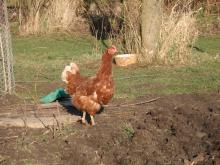
Shortly after moving our new hens in, we went away for a couple of days. When we came home we found that one of our chickens was missing. We assumed that she had been taken by a fox, until I saw on our local Facebook page someone had found a chicken in her garden, and did anyone know who she belonged to? I got in touch and it transpired that our chicken had managed to fly over our back garden fence into a neighbour’s garden, so I went round to my neighbour, popped the chicken in a box and took her back home, and gave her a stern telling off.

Two days later the chicken vanished again, so I checked with my neighbour and, lo and behold, our bird was back in her garden. Another (somewhat shame-faced) expedition with the box and I brought the bird home again. The next day I was again at my neighbour’s door to collect our travelling hen, and I was desperately trying to ingratiate myself with my neighbour when I spotted a piano in her sitting room. “Oh,” I said, “do you play the piano?” She replied that she was trying to teach herself to play, and asked whether I was musical, and did I sing? (Maybe I should have spotted the manic look of a recruiter in her eyes!)

A cup of coffee later and she had me agreeing to try her choir in Biggleswade, and also our church choir. Within a few months I went from not being involved in any musical groups, to being a member of Gamlingay church choir, the Amici Singers (in Biggleswade), The Ensemble of Friends (an a cappella group based in Potton), and the Ely Octagon Singers!

Who would have thought that a hen would be responsible for renewing my love of singing, and for bringing such pleasure back into my life! We are now a few years further along and I have moved house again, but this time I made sure I found a new choir straight away; I am very happy singing with such a talented group of people who make up the Royston Choral Society. And now I know that if I ever struggle to find music again, all I need to do is get some hens!

Midwinter - Review of December 2019 Concert

Submitted by huw on Tue, 05/09/2023 - 09:07

The Royston Choral Society Christmas Concert took place just before Christmas in the St James Academy senior school and lived up to its billing as a traditional Christmas concert of carols and seasonal music.

We commenced the concert with the traditional solo of the first verse of Once in Royal David’s City which was followed by the choir and finally with audience members joining in (as best we could).

We were then treated to three pieces by the choir which were sung with hushed tones that gave the the emotion and reverence required to encapsulate the true meaning of the lyrics.

We were then introduced to the charismatic J50 brass quintet who gave accomplished performances of some more contemporary pieces, including from the world of film scores, adding some variety in between choral pieces.

The audience were thoroughly included in the concert, singing many well known and enjoyed carols throughout.

After an interval of delicious mulled wine and mince pies, the choir treated us some more! Performing pieces from Bob Chilcott and John Rutter which were uplifting and sung with clear diction. It was literally music to my ears!

A further treat from J50 awaited until we came to the traditional final big-sing of Hark the Herald Angels Sing.

The concert was a great success and I look forward to being back at Royston church when it is restored to its former glory following the devastating fire in 2018.

C.Rock

More photographs from this concert (courtesy of Sue Sanders) can be seen here.